Affiliate Disclosure: ErgoSetupPro is reader-supported. When you buy through links on our site, we may earn an affiliate commission at no extra cost to you. We independently tear down structural frames, stress-test mechanical sliding rails, and analyze vascular health metrics to safeguard your focus environment.
Best Ergonomic Chairs with Footrest Arrays: The 2026 Active Recline Blueprint
Sitting locked in a strict 90-degree angle for 10 straight hours doesn’t preserve your posture—it triggers static muscle binding, slows lower-limb circulation, and places continuous physical strain on your lumbar discs. While standard commercial seating frames treat your body as a rigid object, advanced modern remote workspaces utilize a different philosophy. Hunting for the best ergonomic chairs with footrest extensions is no longer a luxury whim; it is a tactical configuration for remote professionals, active day-traders, and creatives who want to transform a tight home office into a highly productive, first-class recovery environment. To sustain cognitive endurance through multi-hour shifts, you require intelligent seating engineered to open your pelvic angle and elevate your calves seamlessly without throwing your cervical spine out of alignment.
📋 Inside This Active Recline Blueprint
- 1. The 3-Second Recline Finder: Modular Seating Targets
- 2. Biomechanical Fact: Zero-Gravity Seating and Vascular Recovery
- 3. Structural Teardown: Testing Extension Rail and Under-Seat Frame Rigidity
- 4. Built-In Footrest Matrix vs. Independent Ottoman Columns
- 5. Lifestyle Clusters: Matching Footrest Extensions to Shift Fatigue
- 6. First-Class Workstation: Merging Active Seating with Motor Standing Desks
- 7. Frequently Asked Questions (Recline Spine Schema)
⚡ The 3-Second Recline Finder: Align Your Target Tilt
📐 110° Deep Focus Stance Best for active coding, text processing, and deep interface work. The under-seat footrest remains 100% retracted, allowing your feet to rest flat to secure a solid lumbar foundation.
📐 135° Power Nap Hub The golden biomechanical angle to let spinal discs rehydrate. The leg support glides out 50% to lift your calves, shifting body mass away from the lower thắt lưng joints.
📐 150° Zero-Gravity Zone Complete executive relaxation. The footrest extends fully to hold your entire lower leg frame, syncing with a supportive headrest to relieve all upper shoulders tension.
Biomechanical Fact: Zero-Gravity Seating and Vascular Recovery
When you sit upright in a standard task shell for hours, gravity pulls blood down into your lower limbs. This process causes minor fluid swelling, calf tightness, and deep vascular pooling. Over time, this poor circulation drains your focus and forces you into slouched postures that add structural pressure to your spine. Deploying high-end ergonomic chairs with footrest components breaks this cycle by allowing your body to rest in a zero-gravity posture.
Extending an integrated leg support while reclining changes your physical weight distribution. Elevating your lower legs to level with or slightly above your hips uses gravity to shift pooled fluids back toward your core. This lower-body elevation unloads the thigh tissues, opens the hips, and allows your spine to settle perfectly against the mesh frame, providing true recovery right at your desk.
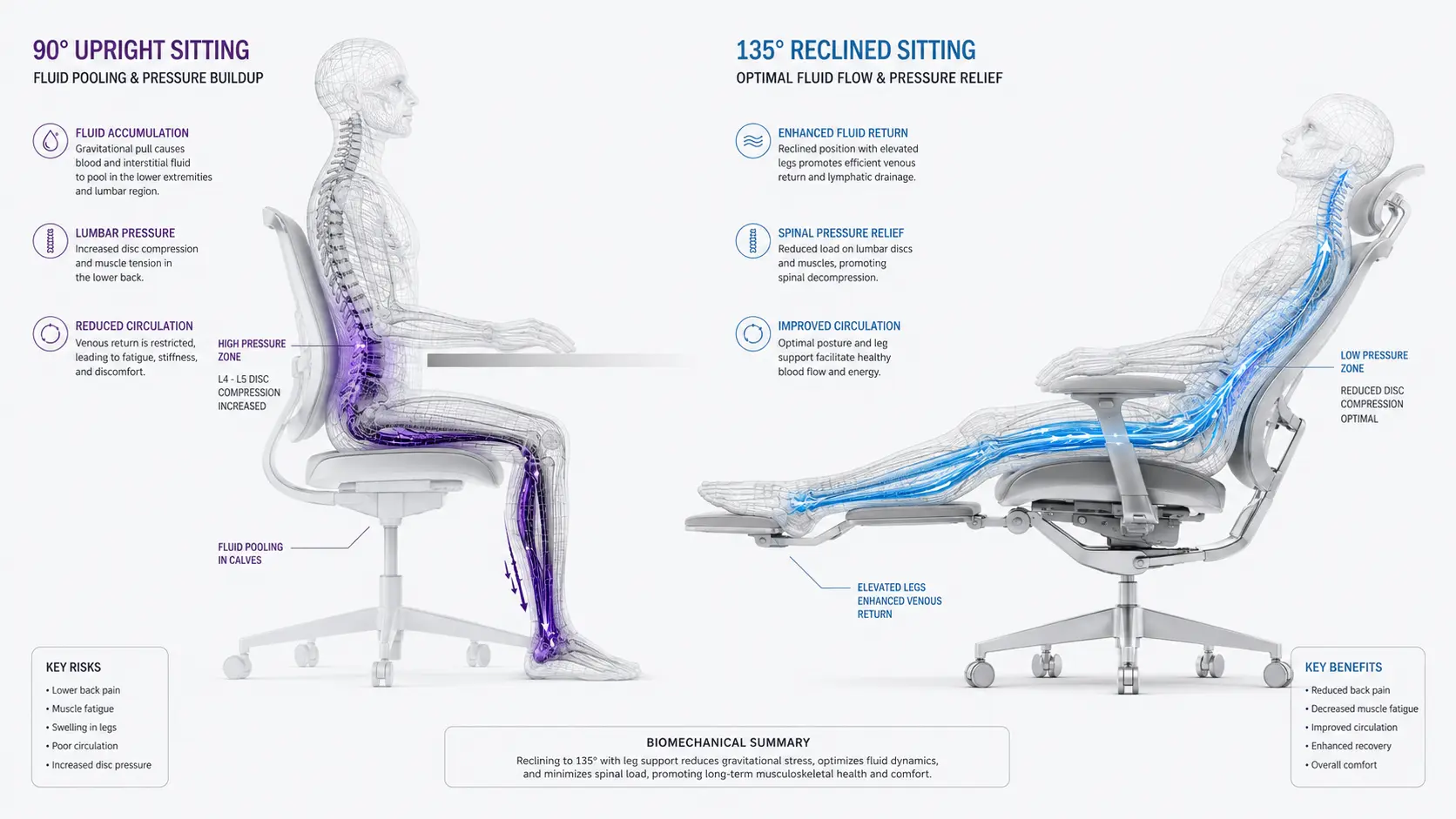
📌 Visual Explainer 1: Advanced clinical posture tracking. Illustrating the open pelvic angle and complete lower-limb muscle relaxation achieved when bringing calves into a level axis with the low back.
Structural Teardown: Testing Extension Rail and Under-Seat Frame Rigidity
Many buyers hesitate to choose a chair with an integrated leg rest because they worry about long-term hardware durability. Cheap office chairs often use flimsy plastic support arms that bend under light loads or jam after a few months of use. To get real value from your purchase, focus on the engineering of the under-seat tracking mechanism.
A high-performance ergonomic chair with footrest functions requires dual solid steel or reinforced alloy extension rails embedded directly into the main seat base frame. This heavy-duty metal build prevents side-to-side wobble and allows the footrest to support over 50 lbs of leg weight safely. Paired with reliable self-locking gear mechanisms, it ensures the leg rest stays firmly in place during extended periods of deep recline.
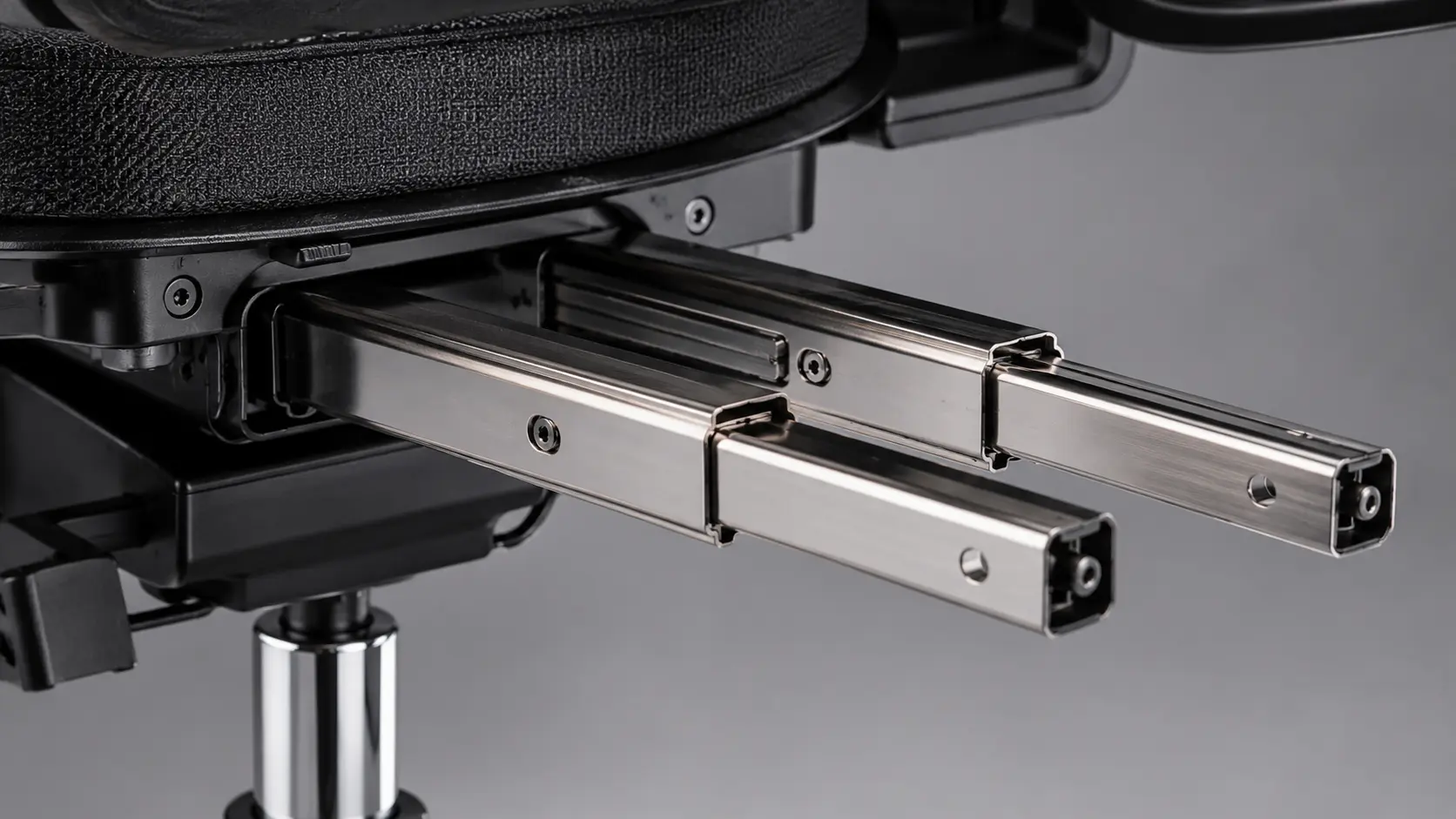
📌 Visual Explainer 2: Technical macro product view. Showcasing the thick, laser-welded structural steel tracking arms that provide reliable support during deep recline mode.
Built-In Footrest Matrix vs. Independent Ottoman Columns
Before completing your office upgrade, evaluate how a built-in support mechanism compares to using a separate, standalone floor Ottoman pad:
| Technical Metric | Integrated Hide-Away Footrest | Separate Floor Ottoman Pad |
|---|---|---|
| Spatial Footprint | Zero Workspace Waste (Glides away directly inside the chassis) | Requires floor space, blocks paths, and easily jams rolling wheels |
| Angle Synchronization | Perfect tracking links that match your chair recline posture | Fixed height that causes leg tension if the chair angle changes |
| Deployment Speed | Deployed in 2 seconds via simple under-seat sliding action | Requires reaching down, moving hardware, and manual positioning |
Lifestyle Clusters: Matching Footrest Extensions to Your Shift Fatigue
To get the absolute most out of your furniture layout, pick a model that matches your daily routine and work habits:
🎨 The WFH Day-Dreaming Creative
If your work involves intense creative planning, programming, or long research sessions, you need a flexible layout. A breathable, multi-zone mesh back setup paired with a sleek, sliding footrest lets you easily recline and brainstorm comfortably without leaving your desk.
💤 The Corporate Office Power-Napper
If you balance high-stress corporate projects and need quick midday recovery breaks, prioritize deep recline capacity. Thick contoured memory foam variants that lock at 150 degrees turn your task seat into a comfortable daybed to recharge your focus in 20 minutes.
First-Class Workstation: Merging Active Seating with Motor Standing Desks
Staying in a single fixed posture all day—even in a relaxed, deep recline—eventually slows down your circulation and strains back muscles. True physical health requires changing your posture throughout your shift. This is why pairing an adjustable, recline-ready chair with a heavy-duty electric standing desk creates the ultimate first-class workspace.
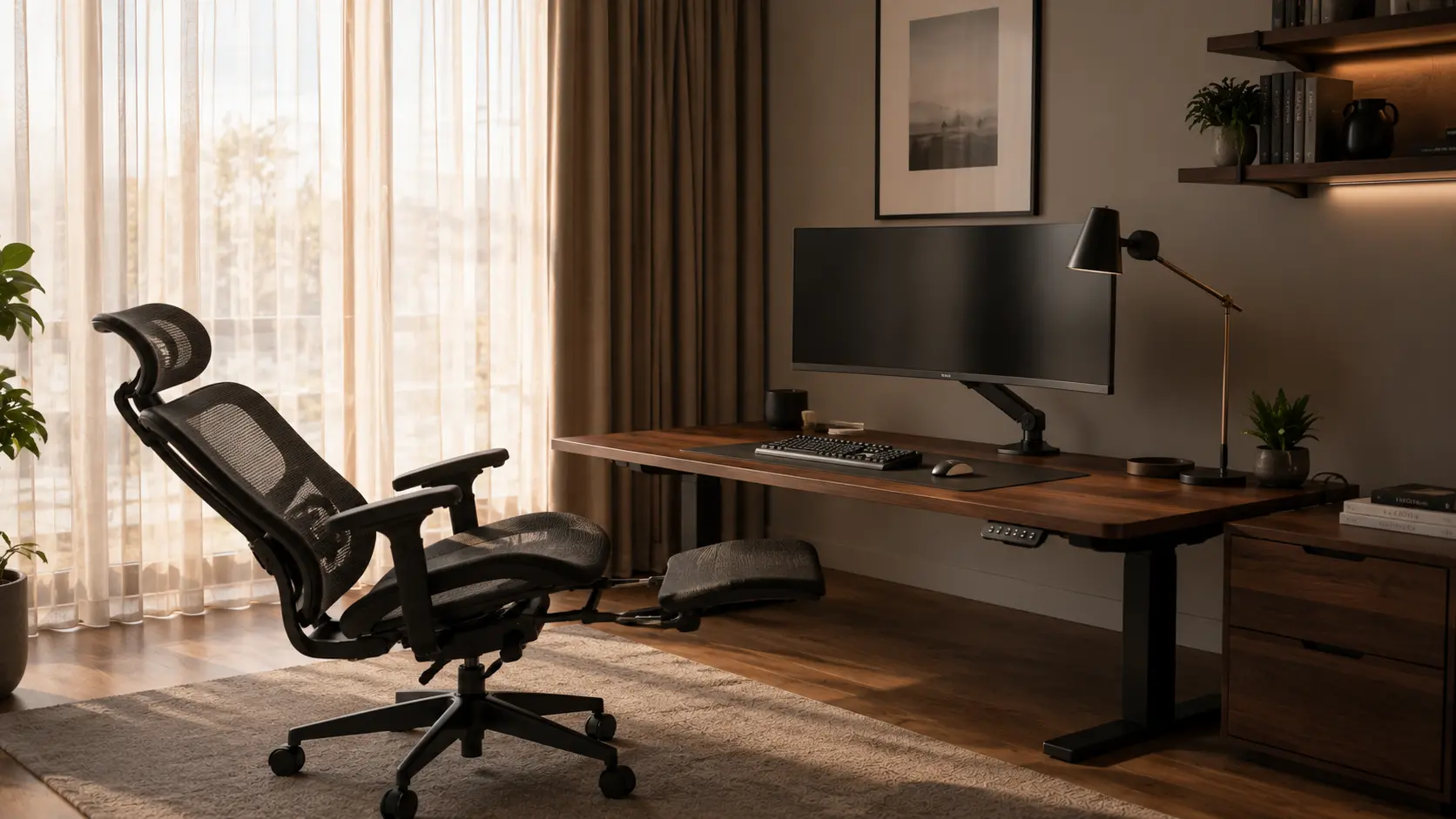
📌 Visual Inspiration 3: Elite, highly comfortable remote setup. Lowering your smart workstation while leaning back into a supported recline transforms your office into a comfortable, focus-first executive hub.
Alternating between seated focus, relaxed reclining, and active standing periods keeps blood circulating and helps prevent spinal fatigue. Using a modern system—such as the heavy-duty FlexiSpot Standing Desk series—lets you easily save customized height presets. This ensures that whether you are standing to tackle an urgent task or reclining with the leg support extended to review long documents, your screens align perfectly with your eye level, completely avoiding neck strain.
Frequently Asked Questions (FAQs)
Does an integrated footrest get in the way when tucked under the seat? ▼
No, high-quality integrated leg rests are engineered to fold back completely beneath the main seat pan frame. When fully retracted, the padding sits flush away from your legs, giving your calves full freedom of movement and ensuring the chair slides easily under standard office desks.
Can the leg support rails safely handle taller and heavier users? ▼
Yes, provided the chair features dual solid stainless steel or heavy-duty structural alloy extension bars. Commercial-grade setups are built to comfortably support lower leg weight for individuals up to 6’3″ (190 cm) tall and frames up to 300 lbs, preventing any dipping or loosening over years of continuous deployment.
Why is a synchronized recline better when utilizing a leg rest extension? ▼
A proper synchro-tilt system opens up your body’s hip angle smoothly as you lean back, reclining the backrest while keeping the seat pan stable. This coordinated movement keeps your lower back perfectly resting against the lumbar panel, ensuring you don’t slide forward when your legs are raised.