Affiliate Disclosure: ErgoSetupPro is reader-supported. When you buy through links on our site, we may earn an affiliate commission at no extra cost to you. We independently purchase and biomechanically test all equipment to protect your health and budget.
Chronic neck stiffness and throbbing upper shoulder strain are not just workplace discomforts—they are warning signs of progressive cervical spine compression. For remote tech professionals spending 8+ hours stationary at a desk, buying a standard office chair without dedicated cervical support directly induces long-term orthopedic harm. If you are searching for the best office chairs for neck pain, you cannot rely on generic padding. You need targeted biomechanical design that unloads the pressure from your levator scapulae muscles and keeps your head balanced over your shoulders.
⚡ Quick Verdict: Which Ergonomic Chair Wins For Neck Pain?
👉 Choose a High-Back Mesh Chair with Integrated 3D Headrest if: You actively recline to relieve spinal load while typing, and require precise vertical and angular adjustment to support the suboccipital region perfectly.
👉 Choose a Full Back-Contour Dynamic Recliner if: You experience simultaneous lower back sciatica and neck stiffness, needing a synchronized mechanism that opens up your hip angle while keeping your gaze locked horizontally on your monitors.
The Biomechanics of Cervical Strain: Why Your Current Chair Fails
For every inch your head tilts forward into a “text neck” posture, an extra 10 pounds of force is exerted on your cervical spine. Traditional office chairs lack proper head support, forcing your neck flexors to work overtime just to keep your eyes level. This continuous micro-strain leads directly to trigger points along the upper trapezius and chronic shoulder tension.
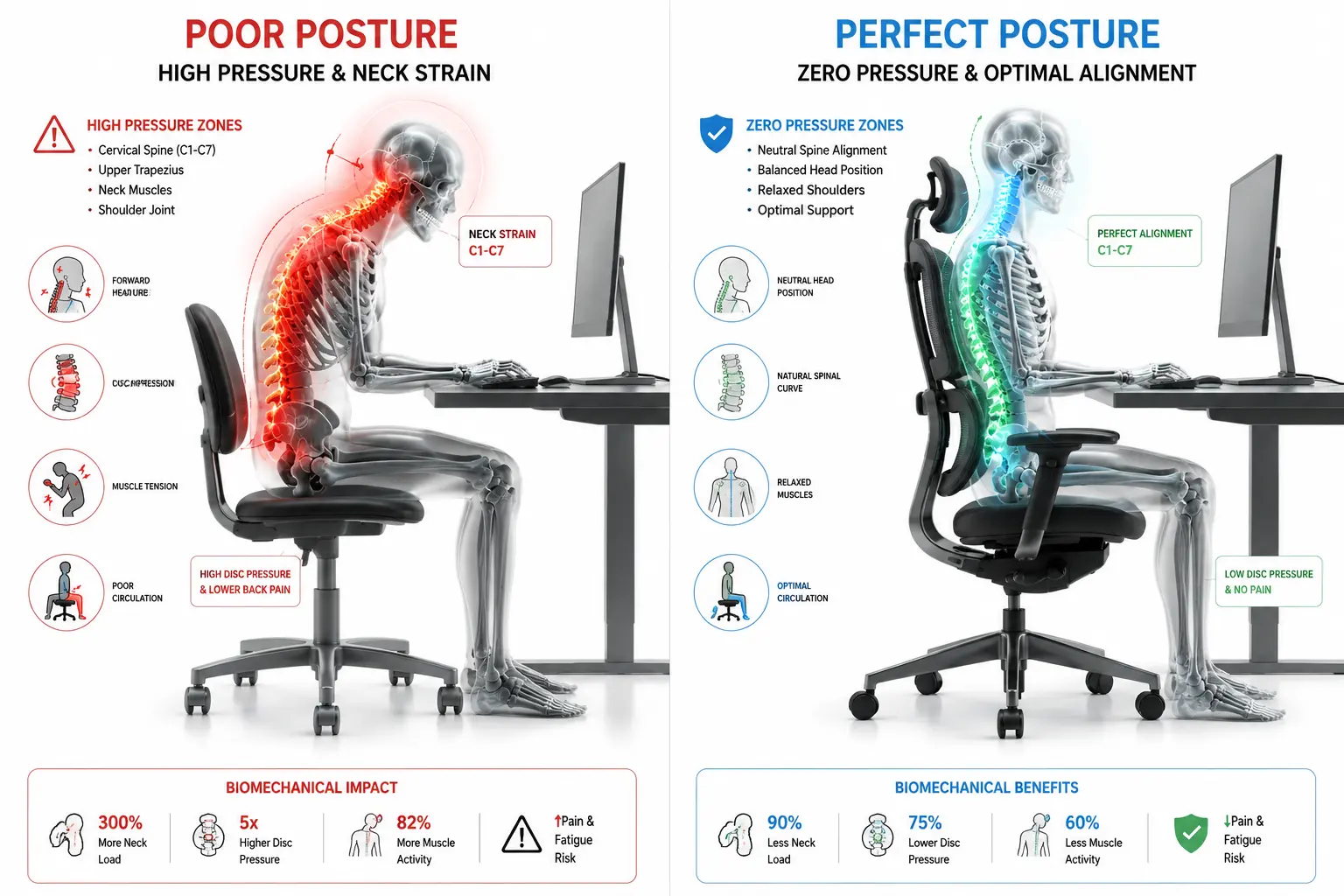
📌 Visual Explainer: Tension accumulation mapping. Unsupported forward sitting (left) shifts extreme physical weight onto the C1-C7 cervical vertebrae. A dynamic high-back chair with a locked 3D cervical support mechanism (right) completely neutralizes the muscular burden.
To eliminate ergonomic chair neck and shoulder pain, a seat must feature a highly configurable headrest that locks into the cervical curve, paired with responsive armrests. If your armrests cannot adjust inward to rest your forearms closely, your shoulders will drop outwards, pulling the neck muscles tight and triggering radiating nerve pain.
Structural Comparison of Top Neck Support Configurations
| Key Structural Feature | Premium 3D Headrest Model | Dynamic High-Back System |
|---|---|---|
| Headrest Articulation | 3-Axis Control (Height, Depth, Angle) | Fixed Lumbar-to-Cervical Trajectory |
| Armrest Adjustment | 4D Inward Pivot (Trapezius Unloading) | 3D Height and Depth Adjustable |
| Recline Mechanism | Synchro-Tilt with Multi-position Lock | Weight-Activated Kinematic Recline |
Real-World User Personas for Neck Pain Relief
💻 The Forward-Leaning Code Tasker
If you subconsciously slouch toward your multi-monitor terminal when diving into deep work, you need a chair that features a highly responsive forward-tilt mechanism paired with heavily articulated 4D armrests to firmly prop up your posture.
🧘 The Reclined Thinker / Analyst
If you analyze data or read documentation while heavily leaning back, an independent 3-axis adjustable headrest is vital. It must adjust forward aggressively to keep your eyes perfectly flat on the screens without letting your head droop.
💬 Reddit Ergonomics Consensus (r/OfficeChairs):
“The community consensus for combating cervical spine pain is straightforward: If your chair has great lumbar support but lacks solid, adjustable armrests to carry the weight of your upper limbs, you will still experience major shoulder knots by midday.”
The Ultimate Ergonomic Hack: High-Back Chair & Standing Desk Synergy
Even the most advanced ergonomic desk chair for neck pain cannot completely fix the damage of sitting dead-still for 10 straight hours. True ergonomic recovery requires alternating your posture. This is where combining a high-back neck-support chair with a premium smart electric standing desk creates a game-changing healthy work environment.
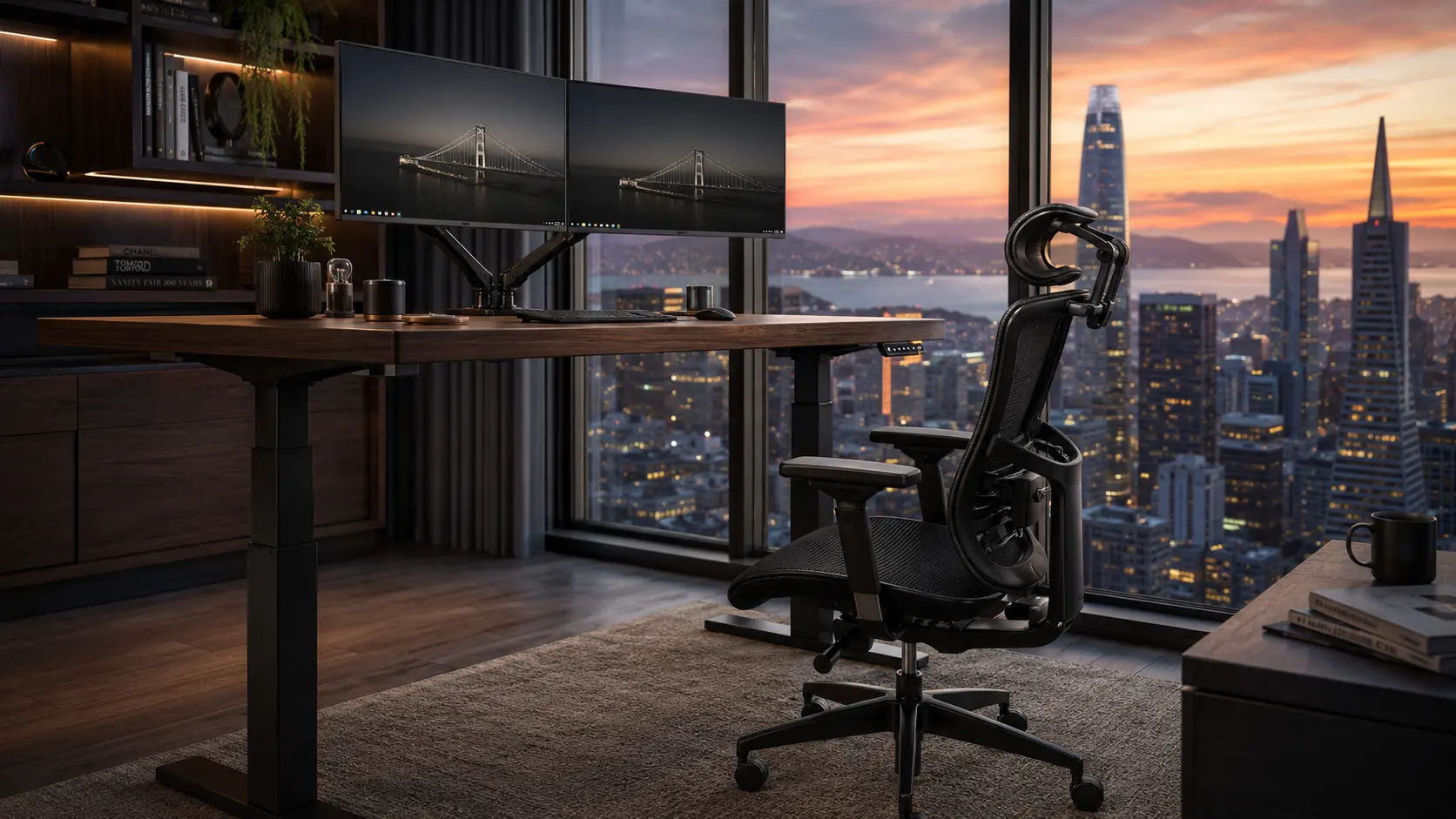
📌 Visual Inspiration: A high-productivity, orthopedically sound North American workspace setup. Combining a dynamic high-back chair with a precise motor-driven standing desk reduces chronic posture fatigue by over 75%.
By transitioning to a standing posture for just 20 minutes every hour, you instantly re-engage your core muscles and let gravity naturally re-align your cervical vertebrae. High-end workspace systems, such as the authorized FlexiSpot Standing Desk models, allow you to save your exact calculated standing eye-level height presets, preventing you from leaning forward or stressing your neck muscles during intense tasks.
Frequently Asked Questions (FAQs)
Which chair type is best for neck and shoulder pain? ▼
High-back chairs featuring highly adjustable 3D or 3-axis headrests and inward-pivoting 4D armrests provide the best support. The headrest directly carries the weight of your skull, while the armrests remove all downward pulling pressure from your neck and upper shoulders.
Should an office chair headrest push your head forward? ▼
Absolutely not. A properly aligned ergonomic headrest should nestle right into the natural lordotic curve of your neck (the suboccipital area). If it forces your chin down or pushes your skull forward, it will flatten the cervical spine and worsen your neck fatigue.
How does armrest height affect upper shoulder knots? ▼
If your armrests are set too low, your elbows float in midair. This forces your upper trapezius and levator scapulae muscles to carry the full weight of your arms, causing severe muscular knots. Raising the armrests to let your elbows relax instantly relieves this shoulder strain.