Honest Transparency: When you purchase your office setup through my links, I earn a small affiliate commission from Amazon at zero extra cost to you. I directly examine textile wear and foam sagging across real corporate floor layouts to separate marketing claims from long-term durability.
When you prepare to upgrade your remote workspace, choosing the right internal mechanisms is only half the battle. Once you establish your ideal adjustments, you run straight into a critical hardware decision that will dictate your physical comfort for the next five years: Should you select a suspended mesh seating pan, or buy a traditional molded foam fabric cushion?
Go to any generic office store and the salesman will tell you “mesh is cool and fabric is soft.” That is a lazy oversimplification. Over eight years of conducting physical corporate workspace audits, I have watched cheap mesh grates stretch out into saggy hammocks within twelve months, causing painful sciatic nerve pinches. On the flip side, I have seen poorly ventilated foam fabric chairs turn into heat-trapping cushions that ruin your alignment. Analyzing mesh vs fabric office chair pros and cons means diving into tailbone pressure distribution, skin temperature shifts, and long-term material breakdown. Let’s look at the raw textile facts to see which material deserves to support your shift.
⚡ Arthur’s Seating Material Verdict Select a **Premium Mesh** chair (like the Herman Miller Aeron or Autonomous ErgoChair) if you work in warm rooms, run hot naturally, and want a responsive surface that eliminates tailbone pressure points entirely. Select a **High-Density Fabric** chair (like the Steelcase Leap or Branch Ergonomic) if you prefer a cozy, deep-cradling sit, like working barefoot or in socks, and want a seat pan that will never pinch your outer thighs.
The Material Blueprint: Side-by-Side Analysis
| Performance Metric | Suspended Mesh Seating | Molded Foam Fabric Seating | The Biomechanical Edge |
|---|---|---|---|
| Thermal Regulation | Perfect (100% open airflow) | Insulating (Retains body warmth) | Mesh (Massive win for hot climates) |
| Tailbone Pressure Relief | Suspended weight floatation | Contoured deep cushion absorption | Fabric (Better for lean frames) |
| Frame Edge Clearance | Requires rigid plastic border rings | Seamless waterfall foam padding | Fabric (Zero thigh pinching risk) |
| Maintenance Lifecycle | Dust-free (Wipes clean instantly) | Absorbs liquids, spills, and dead skin | Mesh (Superior long-term hygiene) |
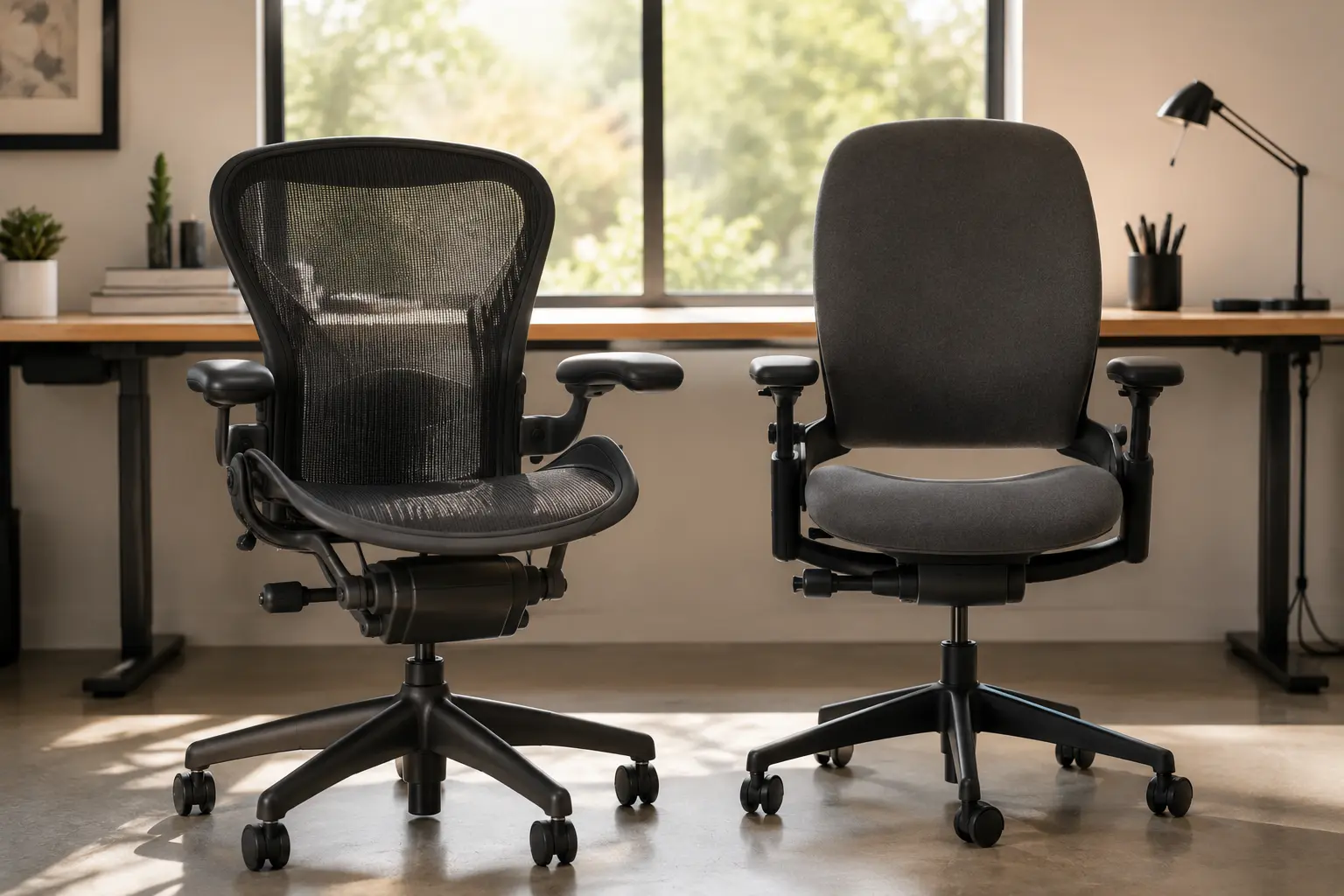 Material Architecture: Evaluating structural mesh tension against the dense pressure distribution of upholstered foam. (Photo: Arthur Pendelton)
Ergonomic Mesh: The Airflow and Floatation System
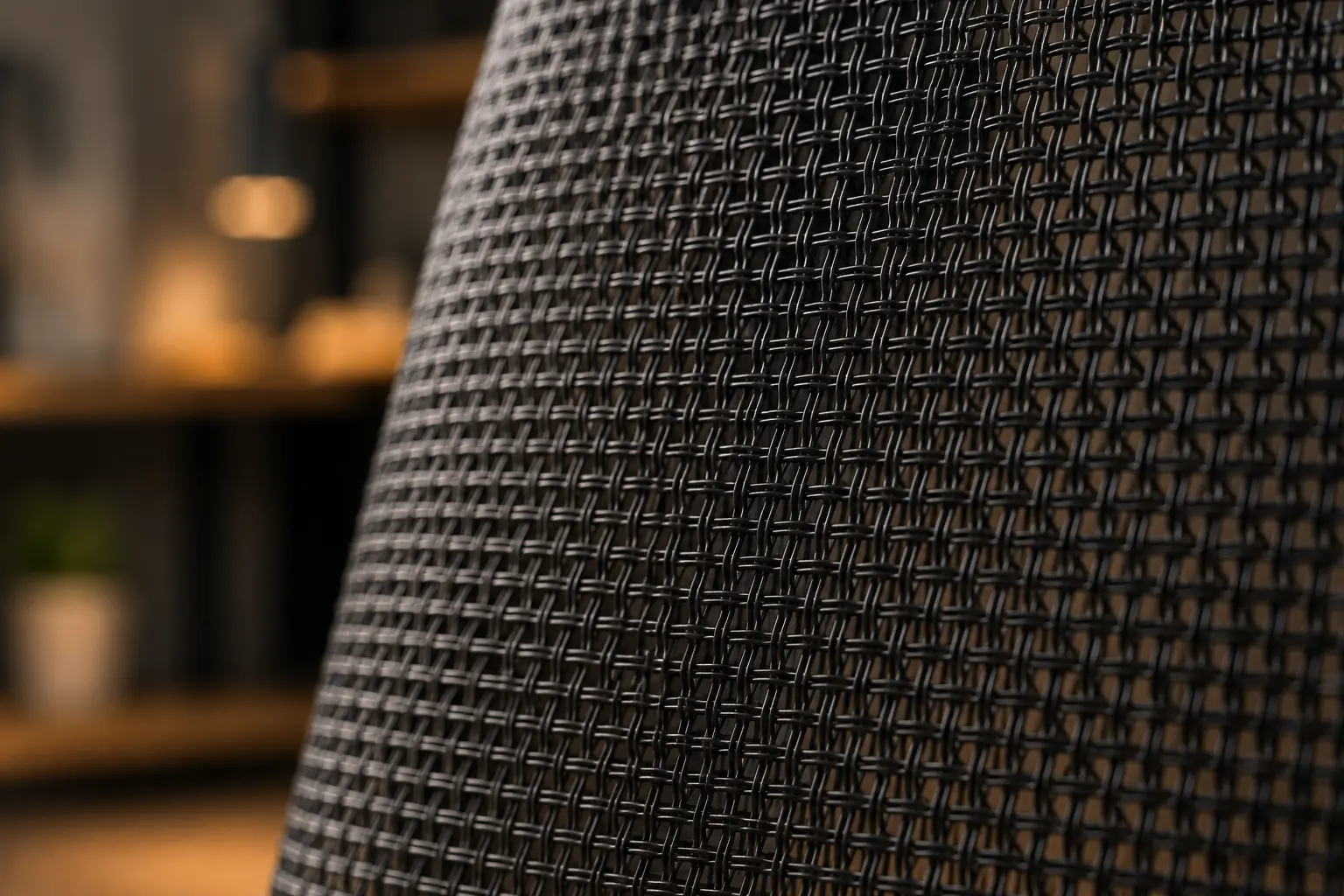
Premium mesh chairs utilize woven elastomeric polymers stretched tightly over a rigid plastic or composite frame. This design drops traditional foam entirely, relying on pure tension to float your skeleton.
The Posture Impact: High-grade mesh is a marvel for thermal regulation. Because human skin continuously releases moisture and heat, standard non-breathable chairs trap that thermal layer, causing micro-sweating that prompts you to slouch forward away from the backrest. Mesh allows 100% of that heat to vent out instantly. Furthermore, by suspending your body weight across a tense woven net, it removes localized hot spots from your sit-bones, locking in highly supportive ergonomic sitting positions that help you prevent back pain while working long hours.
 Elastic Suspension: Multi-zone elastomeric weaves provide varying degrees of tension to support the lumbar curve. (Photo: Arthur Pendelton)
The Hidden Structural Risk: Cheap mesh chairs use low-grade nylon weaves that stretch out and sag within a year. Once the weave loses tension, your tailbone bottoms out onto the hard structural bar underneath. Even worse, mesh requires a rigid hard outer border ring to hold the weave under tension. If you like crossing your legs or sitting wide, your thighs will rub hard against that hard outer ring, pinching vessels and aggravating sciatica nerves.
Upholstered Fabric: The Deep Contour Cradle
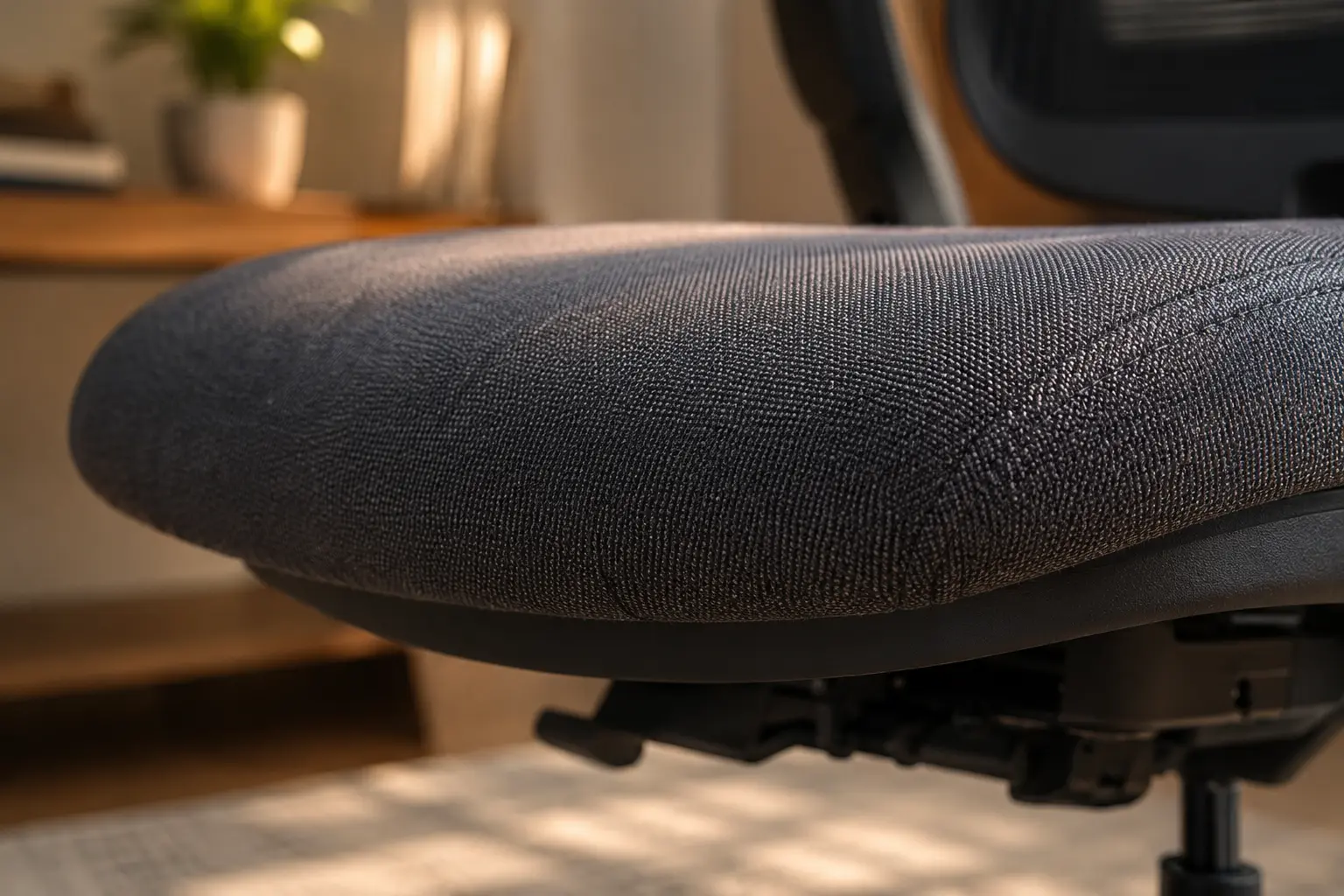
Fabric office chairs rely on an entirely different design approach: a thick layer of injection-molded polyurethane foam glued onto a solid baseplate, wrapped inside a durable woven fabric cover.
The Posture Impact: Fabric seats offer unmatched consistency. High-density molded foam shapes perfectly to your individual lower pelvic structure, distributing your weight evenly across your thighs. Because the soft foam extends all the way over the front lip into a smooth waterfall edge, it never creates a hard boundary ring that could pinch your blood vessels. This seamless padding allows you to shift into a variety of comfortable angles, providing consistent sitting posture for lower back pain deterrence.
 Contoured Depth: Injection-molded polyurethane retains its shape and density over years of heavy use without flattening. (Photo: Arthur Pendelton)
The Hidden Structural Risk: Fabric’s biggest weakness is hygiene and heat buildup. Foam acts like a sponge, absorbing sweat, oil, dead skin cells, and accidental coffee spills over time, making it much tougher to keep clean than a mesh surface. On hot days, that dense layer traps your natural body warmth, which can cause discomfort during long typing marathons if your room lacks active climate control.
The Mechanical Choice: Pros & Cons Summary
- Your office lacks active A/C and you tend to run hot or sweat easily.
- You want a surface that is incredibly easy to dust, clean, and keep sterile.
- You want to match a clean look with your best electric standing desk for home office.
- You have a lean frame and feel that mesh nets push too hard against your sit-bones.
- You love working barefoot or crossing your legs, requiring zero plastic frame contact.
- You want a plush, deep cradle feel for cozy long winter typing hours.
Field Audit FAQ
*Note: Format this section using your premium theme’s native Accordion Block tool to optimize full Google FAQ Schema rich engine placement.*
Q: Can a stretched-out, sagging mesh seat cause sharp lower back pain?
A: Yes, absolutely. When an old mesh pan sags, it forces your hip joints to drop lower than your knees. This tilt rolls your pelvis backward into a posterior slump, flattening your lumbar arc and placing intense structural load on your spinal discs. If your mesh behaves like a sagging hammock, replace the frame immediately.
Q: Is there an office chair configuration that balances both worlds?
A: Yes, many mid-range chairs utilize a highly effective hybrid layout. They feature a breathable mesh backrest to vent heat away from your shoulder blades, paired with a thick, contoured fabric foam seat pan to deliver consistent thigh comfort without any hard plastic rim boundaries.