Affiliate Disclosure: ErgoSetupPro is reader-supported. When you buy through links on our site, we may earn an affiliate commission at no extra cost to you. We independently tear down structural chassis, evaluate high-tensile mesh durability, and test all seating to ensure clean, medical-grade posture alignment.
Best Ergonomic Chairs for Gaming: The 2026 Endurance and Focus Blueprint
Marathon streaming sessions, intense ranked competitive climbs, and multi-hour software production pipelines all share a common physical enemy: structural spinal exhaustion. Across the global gaming community, a massive transition is taking place. Dedicated players are abandoning traditional, flashy bucket-style racing seats because they notice how these setups pinch shoulder girdles and flatten the lower back. Investing in high-performance ergonomic chairs for gaming is no longer just a cosmetic upgrade—it is a critical workspace adjustment to prevent chronic lumbar strain. To preserve your physical focus, you require highly adjustable seating engineered to actively support your natural lordotic curve under extended multi-hour sits.
📋 Inside This Gaming Performance Guide
- 1. Quick Verdict: Immediate Tactical Seating Selections
- 2. The Biomechanical Clash: Racing Buckets vs. Orthopedic Ergonomics
- 3. Three Crucial Engineering Pillars for Competitive Play
- 4. Head-to-Head Architectural Specification Comparison
- 5. Lifestyle Clusters: Matching Frames to Your Combat Stance
- 6. The Ultimate Setup: Syncing High-Tier Seating with Electric Standing Workstations
- 7. Frequently Asked Questions (Gamer Health Schema)
⚡ The Quick Verdict: Selecting Your Tactical Gaming Frame
👉 Choose a High-Tensile Full-Mesh Frame if: You play competitive mouse-and-keyboard titles in warm environments. You require maximum heat dissipation and crisp 4D armrest rotation to support your forearms during intensive micro-aiming loops.
👉 Choose a Hybrid Memory Foam & Mesh Shell if: You prefer relaxed console or controller setups, often leaning deep into a recline or sitting cross-legged. You want a soft, wide seat pan that includes a fold-out footrest for extended relaxation sessions.
The Biomechanical Clash: Racing Buckets vs. Orthopedic Ergonomics
Traditional gaming chairs are heavily modeled after professional motorsport bucket seats. While this design looks bold on streams, its mechanical purpose is fundamentally flawed for desk environments. Racing seats are engineered to restrict sideways movement and hold drivers firmly in place against high-speed cornering forces—not to support prolonged upright computer work. Their flared shoulder wings force your shoulder blades forward, creating a hunched posture that tightens the chest and compresses your upper back and neck.
Conversely, migrating toward dedicated ergonomic chairs for gaming unlocks crucial structural benefits. Instead of confining your frame, an orthopedic design adapts to your body’s movements. High-performance models feature an open-back matrix that lets your shoulders move freely, while a dynamic lumbar support panel continuously tracks your lower spine. This crucial bracing counteracts posterior pelvic tilt, distributing upper-body mass uniformly and lowering internal L4-L5 vertebral disc pressure by up to 40%.
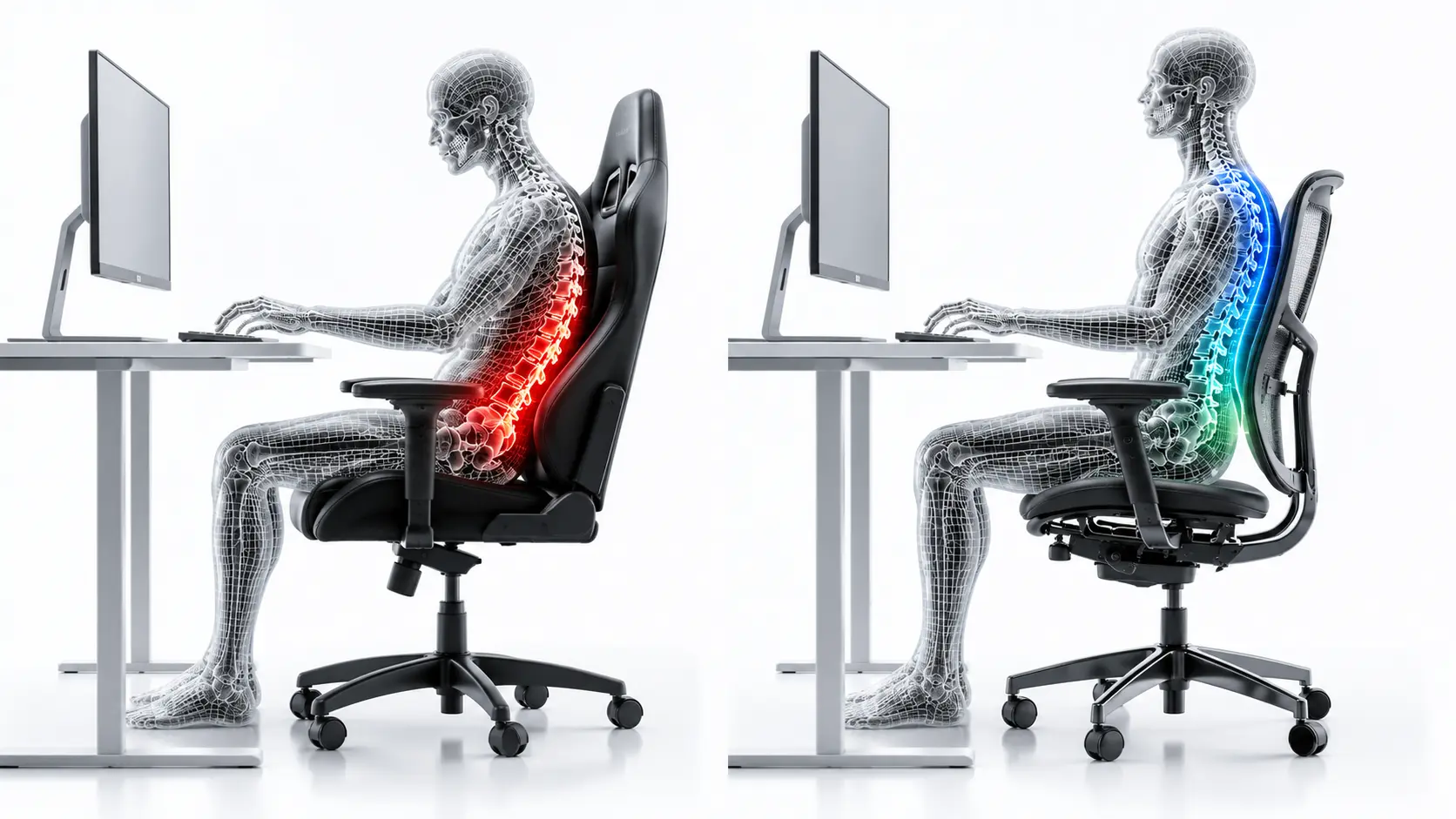
📌 Visual Explainer 1: Biomechanical pressure tracking rendering. The left model displays how racing chair cushions trap heat and concentrate dangerous pressure spots on the coccyx. The right layout showcases how open ergonomic mesh balances load points across the pelvic floor.
Three Crucial Engineering Pillars for Competitive Play
True focus and speed require more than basic adjustments. When searching for the best ergonomic chairs for gaming deployment, evaluate these three specific engineering configurations:
A. Full 4D Armrest Articulation
Your arms dictate your in-game precision. Basic, fixed armrests leave your elbows hanging, pulling your shoulder and neck muscles down into a stressful posture. Advanced 4D armrest systems adjust in four directions: height, depth, width, and inward rotation angle. Inward adjustment supports your forearms perfectly while holding a controller or typing on a compact mechanical keyboard, taking the load off your upper body entirely.
B. High-Elastic Tension Mesh Breathability
During intense competitive matches, stress triggers rapid body heat buildup. Standard synthetic faux-leather seats trap this moisture, making your skin hot and causing you to slouch or lean forward over time. Premium woven elastomeric mesh breathes naturally, keeping your body temperature level. It distributes your weight evenly across the seat pan, ensuring you stay comfortable and focused during long sessions.
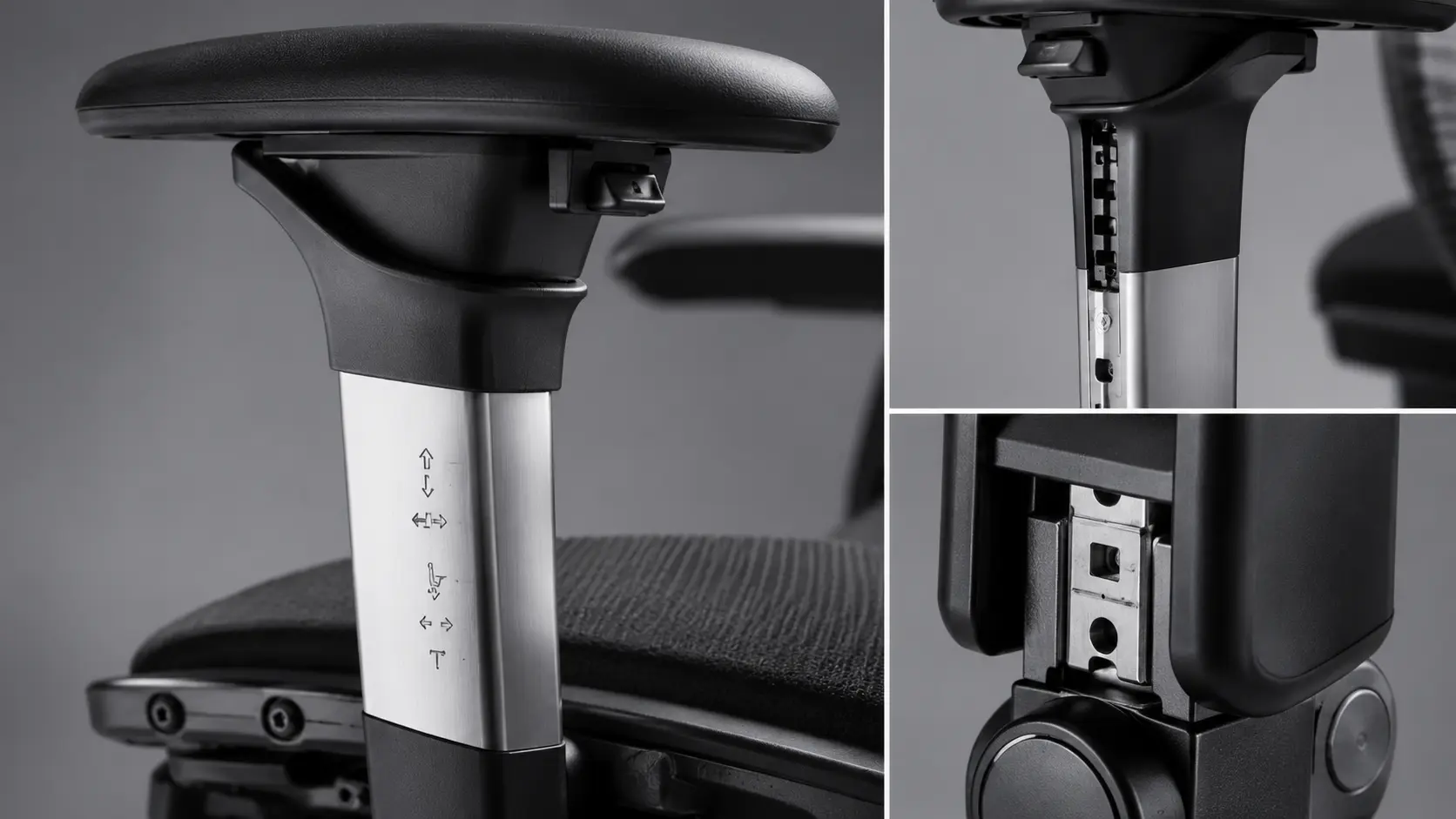
📌 Visual Explainer 2: Technical macro product view. Highlighting the internal solid steel locking pins and smooth sliding tracks that enable reliable 4D armrest adjustment under heavy use.
Head-to-Head Architectural Specification Comparison
| Ergonomic Criteria | Orthopedic Full-Mesh Task Chair | Classic Racing Bucket Seat |
|---|---|---|
| Shoulder Trajectory | Open Tapered Frame (Enables Free Upper Torso Motion) | Flared Plastic Wings (Forces Protraction and Slouching) |
| Lumbar Tracking | Active Dynamic Panel (Tracks Real-Time Changes) | Removable Elastic Strapped Foam Pillow (Slides Out of Place) |
| Armrest Flexibility | Full 4D Pivot (Matches Mouse or Controller Alignment) | Basic 1D Vertical Travel (Locks Elbows into Static Strain) |
| Chassis Material | Die-Cast Brushed Aluminum or Reinforced Structural Nylon | Thin Plywood and Hollow Lightweight Tubular Steel Frame |
Lifestyle Clusters: Matching Frames to Your Combat Stance
Seating performance is highly personal. To secure real comfort, your choice of ergonomic chairs for gaming should align perfectly with your preferred input device and posture habits:
🎯 The Competitive FPS Keyboard Strategist
If you actively lean forward or sit upright during competitive matches, you need a highly responsive setup. Look for full-mesh configurations that include seat-depth adjustability and a responsive front tilt. This keeps your back fully supported against the frame even when leaning in toward the display.
🎮 The Relaxed Controller RPG Enthusiast
If you prefer long immersion loops, relaxing with a controller or streaming your favorite shows, prioritze deep recline flexibility. A hybrid frame with a wide, memory foam base and a built-in footrest lets you kick back comfortably without compressing your thighs.
The Ultimate Setup: Syncing High-Tier Seating with Electric Standing Workstations
Clinical orthopedic evaluations prove that remaining completely seated for 10 consecutive hours compromises deep circulation, regardless of your chair’s quality. True focus and performance longevity require changing your position throughout the day. Combining a dynamic mesh chair with a heavy-duty electric standing desk creates a modern, highly effective station layout.
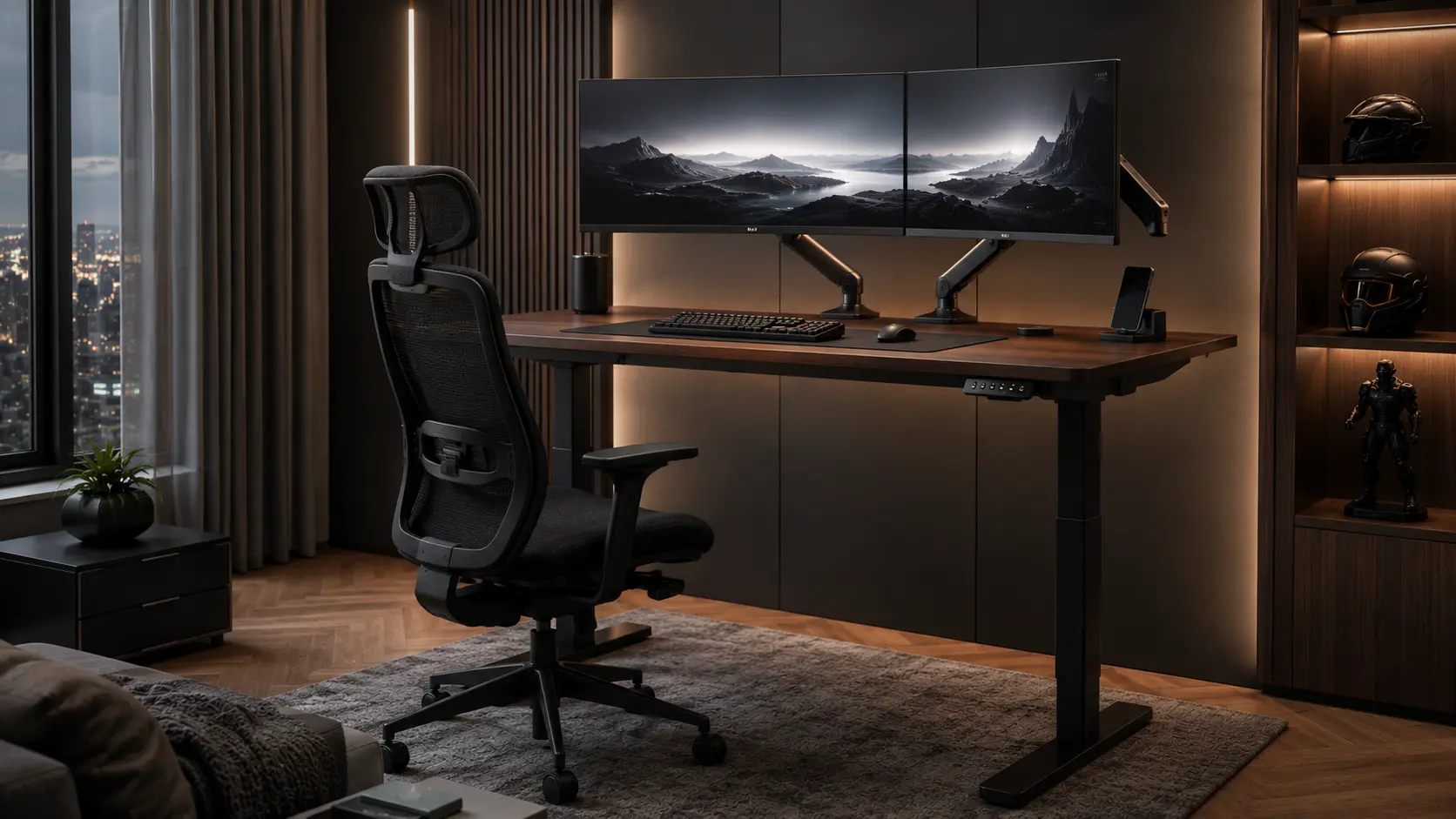
📌 Visual Inspiration 3: High-end professional command station. Alternating to a standing stance for 15 minutes during long gaming sessions helps reset your posture, clears away lower back tension, and keeps reflexes sharp.
Switching to a standing posture helps decompress your spinal discs, activates major core stability muscles, and improves circulation. Integrating an electric desk system—such as the heavy-duty FlexiSpot Standing Desk series—lets you easily save your preferred height presets. This ensures that whether you are standing or leaning back to analyze a match, your monitors remain perfectly at eye level, saving you from forward neck tilt or upper back fatigue.
Frequently Asked Questions (FAQs)
Why are ergonomic chairs better than racing gaming chairs for back health? ▼
Ergonomic models prioritize natural spine support and healthy joint positioning. Unlike racing chairs—which feature stiff side wings that push your shoulders forward into a hunch—orthopedic frames allow for free arm and upper-body movement while actively supporting your lower back to prevent fatigue.
How do 4D armrests improve accuracy and comfort during long sessions? ▼
4D armrests adjust across four specific axes (height, depth, width, and angle) to match your forearms precisely. Rotating the armrests inward supports your arms perfectly while holding a controller or typing on a compact mechanical keyboard, relieving muscle tension across your neck and shoulders.
Will an elastic mesh seat pan lose its tension after several years of heavy use? ▼
Premium task setups use high-density woven elastomeric polymers that maintain their protective shape and tension for over 5 to 10 years. This performance mesh evenly balances pressure points across your legs and back, avoiding the sagging or flattening typical of low-cost traditional foam seating.