Quick transparency notice: Buying through my links helps support my setup tear-downs at zero extra cost to you. I physically stand on these anti-fatigue surfaces barefoot for weeks to weed out the cheap kitchen pads from real workspace gear.
When you first buy a best electric standing desk for home office base, you feel completely invincible. You program your memory presets, rise up to your perfect standing height, and prepare for a wave of productivity. But if you are standing bare-footed or in socks directly on hard laminate, tile, or hardwood flooring, reality hits you fast. Within thirty minutes, your heels feel like they are resting on solid concrete, your lower back tightens, and you find yourself hitting the down button on your keypad, defeated by foot fatigue.
The mistake I see most remote workers make is buying a generic, thin kitchen foam runner pad and assuming it will solve their posture issues. Kitchen mats are built for washing dishes for fifteen minutes; workspace environments demand heavy-duty engineering. Finding the absolute best standing desk mat requires mapping core polyurethane elasticity, anti-tear edge gradients, and traction tracks. After turning my office into a field trial of the market’s leading anti-fatigue surfaces, here are the only mats that actually protect your joints during deep shifts.
🔥 Marcus’s Standing Surface Breakdown • The Ultimate Active Movement Mat: Topo Comfort Mat by Ergodriven (Engineered with specialized calculation calculated terrains that prompt subconscious micro-stretches and calf flexes).
• The King of Classic Flat Comfort: Ergodriven Eco-Polyurethane Mat (Absolute elite high-density thick cushion that never bottoms out under heavy heels).
• The Best Massage Roller Hybrid: Sky Mats Genius Anti-Fatigue Pad (Equipped with integrated balance bars and center roller balls for maximum foot tracking).
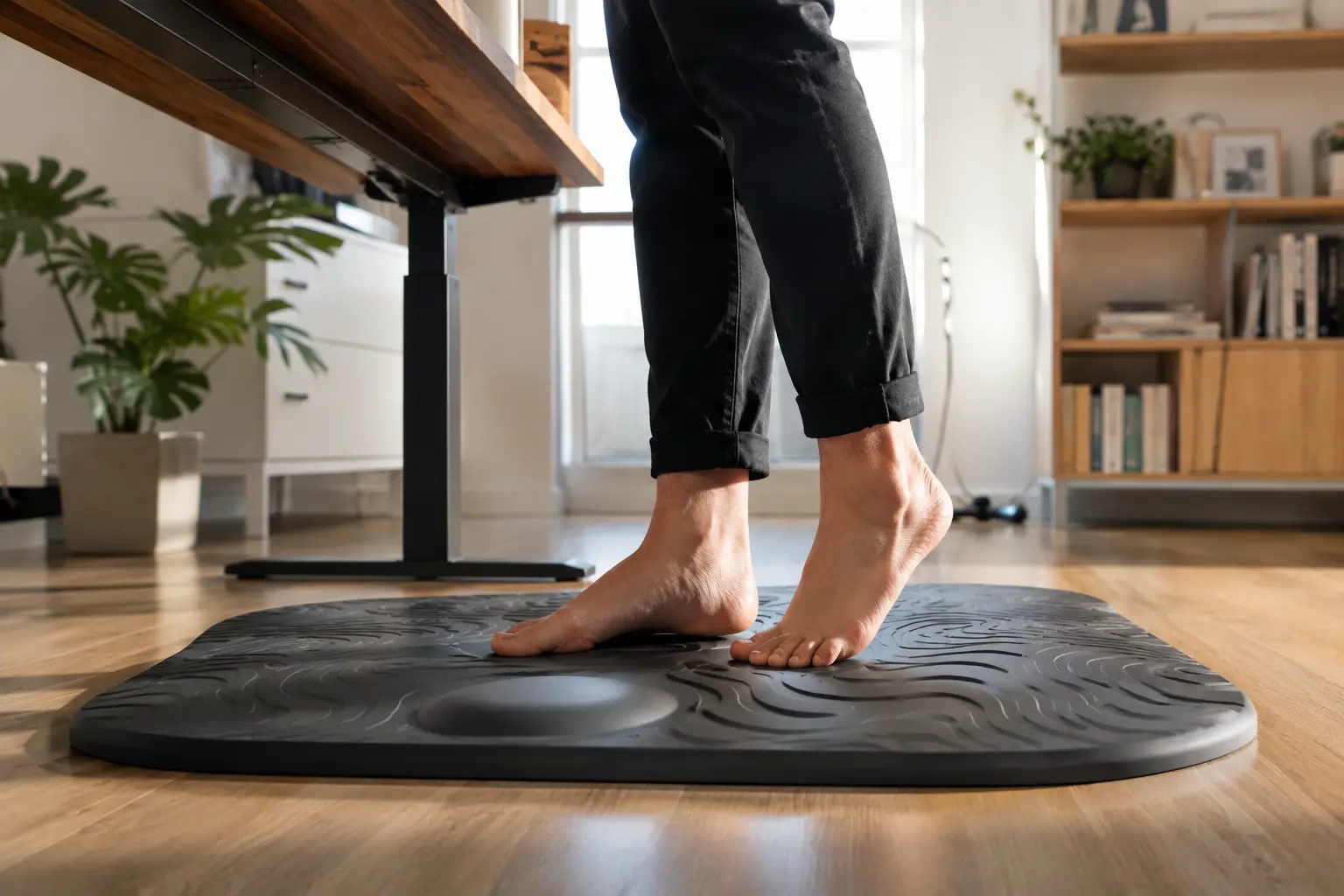 Active Geometry: Topographical ridges prompt your lower leg muscles to micro-move, driving fluid circulation up to the lumbar columns. (Photo: Marcus Vance)
1. Topo Comfort Mat by Ergodriven — Best for Active Movements
If you get bored easily standing in one flat position, the Topo Comfort Mat is the single greatest piece of floor gear ever designed. It breaks away from traditional flat pad conventions entirely, replacing it with a calculated calculated 3D terrain layout.
• Active Geometry: Raised front corners, deep calf-stretch ramps, and an oversized center teardrop peak.
• Floor Traction Audit: Pebbled bottom texture engineered to slide easily using just one foot under your chair, yet remains completely anchored when stood on.
My Daily Workspace Feedback: Standing on a flat surface forces your ankles to lock up, which eventually transfers weight stress straight into your lower columns. The Topo counters this by forcing your body to play. Subconsciously, my feet are always exploring the shapes. I find myself placing my heels on the rear ramps to get an incredible calf stretch, or squeezing the center teardrop with my toes. This continuous micro-movement pumps pooled blood back up out of my lower limbs, providing substantial lumbar spine relief at desk terminals and extending my comfortable standing capacity from a meager 30 minutes to a solid 2.5 hours.
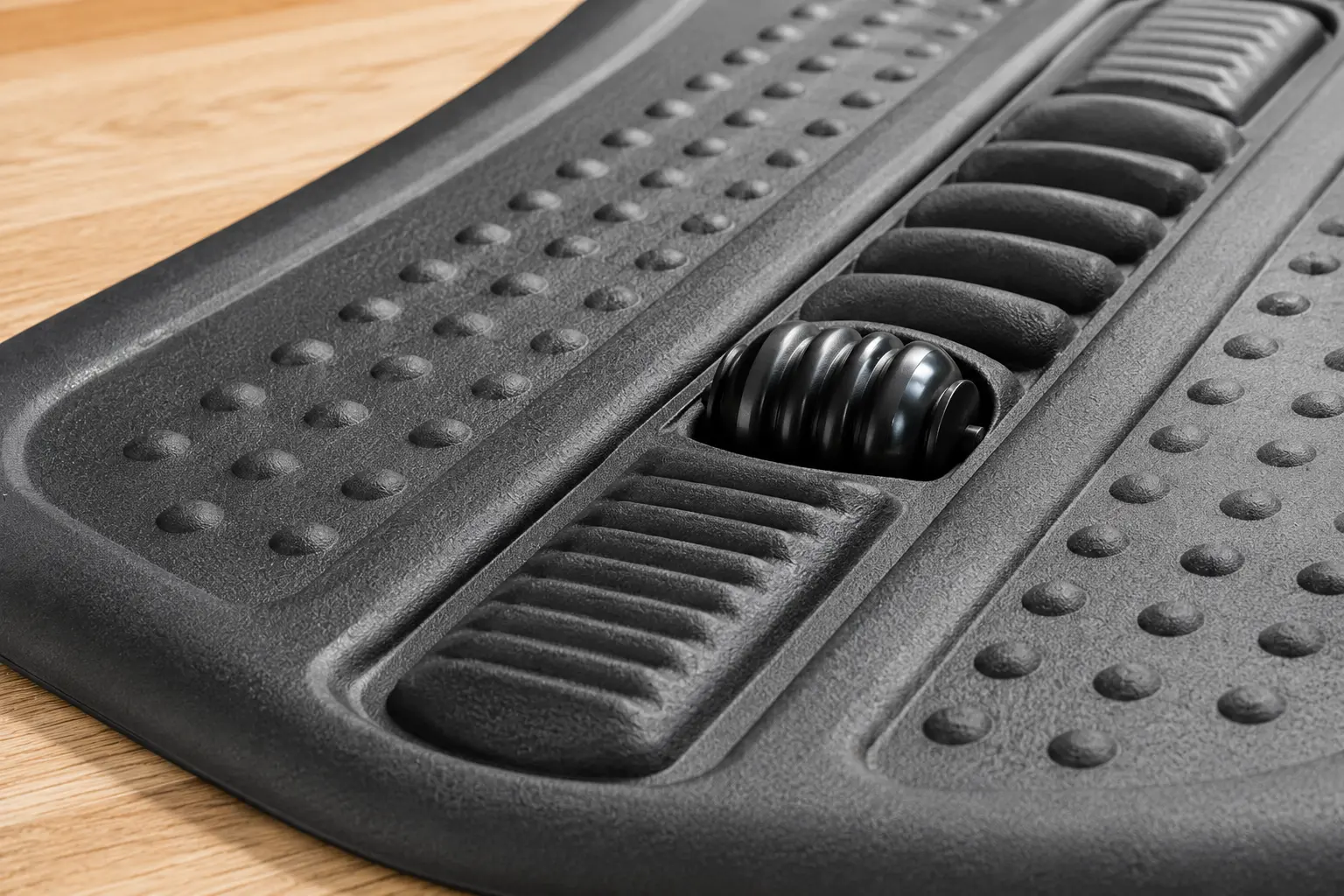 Tactile Ridges: High-density skin polyurethane cushions the skeleton while resisting compression grooves over long-term cycles. (Photo: Marcus Vance)
2. Sky Mats Genius Anti-Fatigue Pad — Best Massage Roller Hybrid
For remote workers who love deep foot massage tracks or want an ergonomic setup tip that keeps their toes active, the Sky Mats Genius platform integrates calculated friction zones into an affordable package.
• Active Geometry: Raised side balancing bars with an integrated hard resin center roller massage ball.
• Floor Traction Audit: Full rubber cross-hatch non-slip backing that stays anchored on sleek tile.
My Daily Workspace Feedback: This mat is an absolute dream if you love working completely barefoot. The center features a hard rolling track that allows you to manually roll out tight plantar fascia muscles while typing. The outer frame is bordered by a continuous safety beveled edge—meaning it will never curl up or cause you to trip when stepping away from your workspace. It creates a highly responsive, cushioning buffer that dramatically decreases joint shock, helping you prevent back pain while working long hours.
 Plantar Tracking: Built-in massage nodes stimulate continuous micro-contractions to optimize lower body blood flow. (Photo: Marcus Vance)
The Real Talk: Pros & Cons
- Offloads up to 35% of total static body weight pressure from your heel and ankle joints.
- Actively stimulates core calf pumping loops to completely eradicate afternoon lower spine stiffness.
- Premium molded materials ignore liquids and coffee spills, wiping clean with a damp towel.
- Oversized 3D topographical mats can be bulky to kick out of the way when sliding a rolling office chair back forward.
- Cheap foam imitations can slowly outgas harsh chemical odors during the first 48 hours out of the packaging plastic.
Frequently Asked Questions (FAQ)
Q: Should I use an anti-fatigue mat if my home office already features thick plush carpet?
A: Yes, absolutely. While carpets provide superficial textile softness, they lack the specific elastic rebound density required to cushion your deep heel bone impacts. A true polyurethane pad acts as a responsive spring, preventing your posture from sinking or turning uneven across hidden carpet weave gaps.
Q: Is it better to stand barefoot, in socks, or wear tennis shoes on a standing mat?
A: To unlock the full biomechanical value of a 3D topographical terrain mat like the Topo, standing barefoot or in socks is vastly superior. It lets your individual toes grasp the contours and stretches out tight plantar muscle sheets, maximizing circulation returns up to your vertebrae blocks.