Affiliate Disclosure: ErgoSetupPro is reader-supported. When you buy through links on our site, we may earn an affiliate commission at no extra cost to you. We independently tear down, mechanically measure, and test all workplace furniture to ensure objective, medical-grade alignment accuracy.
Best Ergonomic Office Chairs for Lower Back Pain Relief: The 2026 Spinal Alignment Blueprint
A dull, radiating ache in your lumbar spine, deep gluteal tightness, and the structural exhaustion that forces you to shift positions every ten minutes are not minor side effects of desk work—they are direct consequences of mechanical spinal compression. For remote workers, software engineers, and financial analysts in the US and Canada racking up over 50 hours a week seated, looking for the best office chairs for lower back pain is an urgent medical intervention. Generic mesh seating or over-padded executive leather recliners fail because they do not counteract pelvic tilting. To completely eradicate lumbar fatigue, you require heavy-duty seating architecture engineered to sustain your spine’s natural lordotic curve under continuous gravity.
📋 Inside This Lumbar Health Guide
- 1. Quick Verdict: Immediate Lumbar Seating Selections
- 2. The Biomechanics of Lumbar Compression (L1-L5 Disc Physics)
- 3. Structural Features: What Actually Stops Lower Back Strain?
- 4. Head-to-Head Lumbar Specification Comparison Table
- 5. Lifestyle Clusters: Matching Chairs to Your Sitting Habits
- 6. The Dynamic Setup: Eradicating Chronic Back & Neck Strain
- 7. Market Realities: New Market Premium vs Certified Refurbished
- 8. Frequently Asked Questions (Lumbar Spine Schema)
⚡ The Quick Verdict: Matching Your Back Pain Profile
👉 Choose an Auto-Dynamic Split-Back Mesh Chair if: Your pain flares up severely during active work. You need a dedicated lower back panel that automatically tracks your micro-movements, providing continuous sacral bracing without manual adjustments.
👉 Choose a Mechanical Synchro-Tilt Fabric Task Chair if: Your lower back pain triggers stiffness that radiates down into your hamstrings or hips. You require a deep recline with seat-pan slider integration to mechanically decompress the lower vertebrae.
The Biomechanics of Lumbar Compression (L1-L5 Disc Physics)
When you stand upright in a healthy posture, your spine naturally forms an ‘S’ shape, perfectly balanced. In this vertical configuration, the weight of your upper body is uniformly distributed across your spinal discs. However, the moment you drop onto an unsupportive, flat chair, your pelvis automatically rotates backward—a medical condition known as posterior pelvic tilt. This rotation flattens the natural lordotic curve of your lower back, converting it into an artificial, rigid ‘C’ shape.
This structural collapse is precisely why investing in specialized ergonomic chairs for back pain becomes an absolute health necessity. Sitting in a slouched position increases the localized physical pressure on your L4 and L5 vertebral discs by up to 150% compared to standing. Over multi-hour sessions, this continuous downward strain pinches the nerve roots, triggering chronic numbness, and forces the quadratus lumborum muscles into painful, persistent tissue knots.
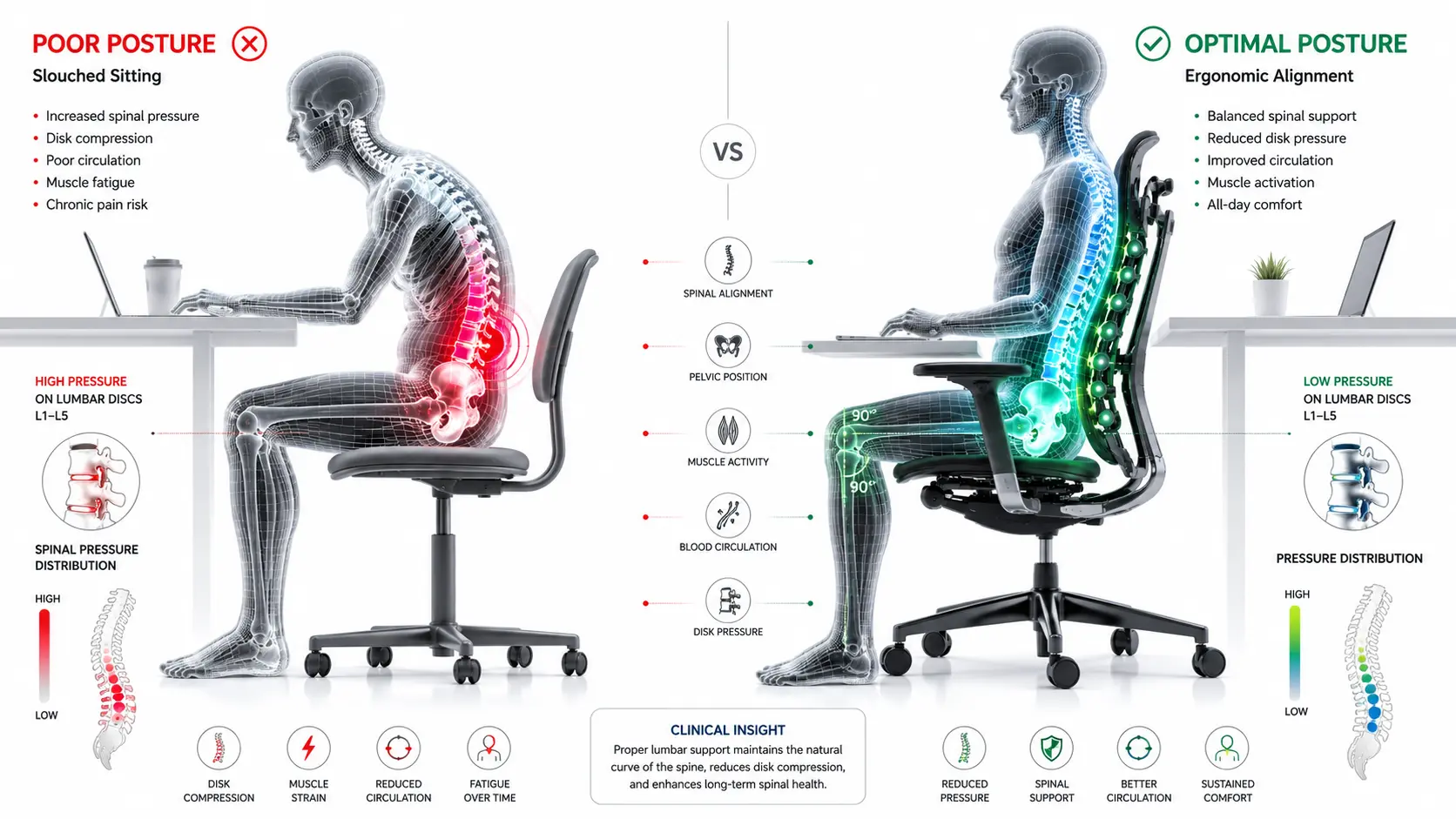
📌 Visual Explainer 1: Scientific skeletal tracking rendering. The left viewport displays standard workspace slouching, causing severe mechanical force concentrations (highlighted in red) on the L4-L5 lumbar discs. The right viewport shows complete spinal stabilization utilizing an active pelvic support mechanism.
Structural Features: What Actually Stops Lower Back Strain?
Most professionals mistakenly believe that massive, plush foam cushions offer the best solution for lower back pain. In reality, thick unyielding foam traps heat and locks the pelvis into a static, harmful position. To secure long-term relief and sustain focus, a high-performing ergonomic desk chair for lower back pain must include three critical structural engineering features:
A. Height and Depth Adjustable Sacral-Lumbar Bracing
True posture correction does not start at the waist; it starts at the sacrum—the bony base of your spine. A premium lumbar mechanism must adjust both vertically (to target your unique height) and horizontally (to control support depth). Without depth adjustability, a generic chair cannot accommodate varying body frames, leaving a mechanical gap that triggers slouching and intensifies ergonomic chairs for back pain symptoms.
B. Synchronized Recline Weight Distribution
When selecting the absolute best ergonomic office chairs for lower back pain, look closely at the tilt mechanism. In standard office seating, basic recline designs tilt the backrest and seat pan at identical angles, which lifts your thighs and pinches your blood vessels. A proper synchro-tilt design reclines the backrest at a 2:1 ratio relative to the seat pan. This mechanical motion opens up your hip angle and decompresses the lower spine while keeping your feet flat on the floor, relaxing your lower limbs completely.
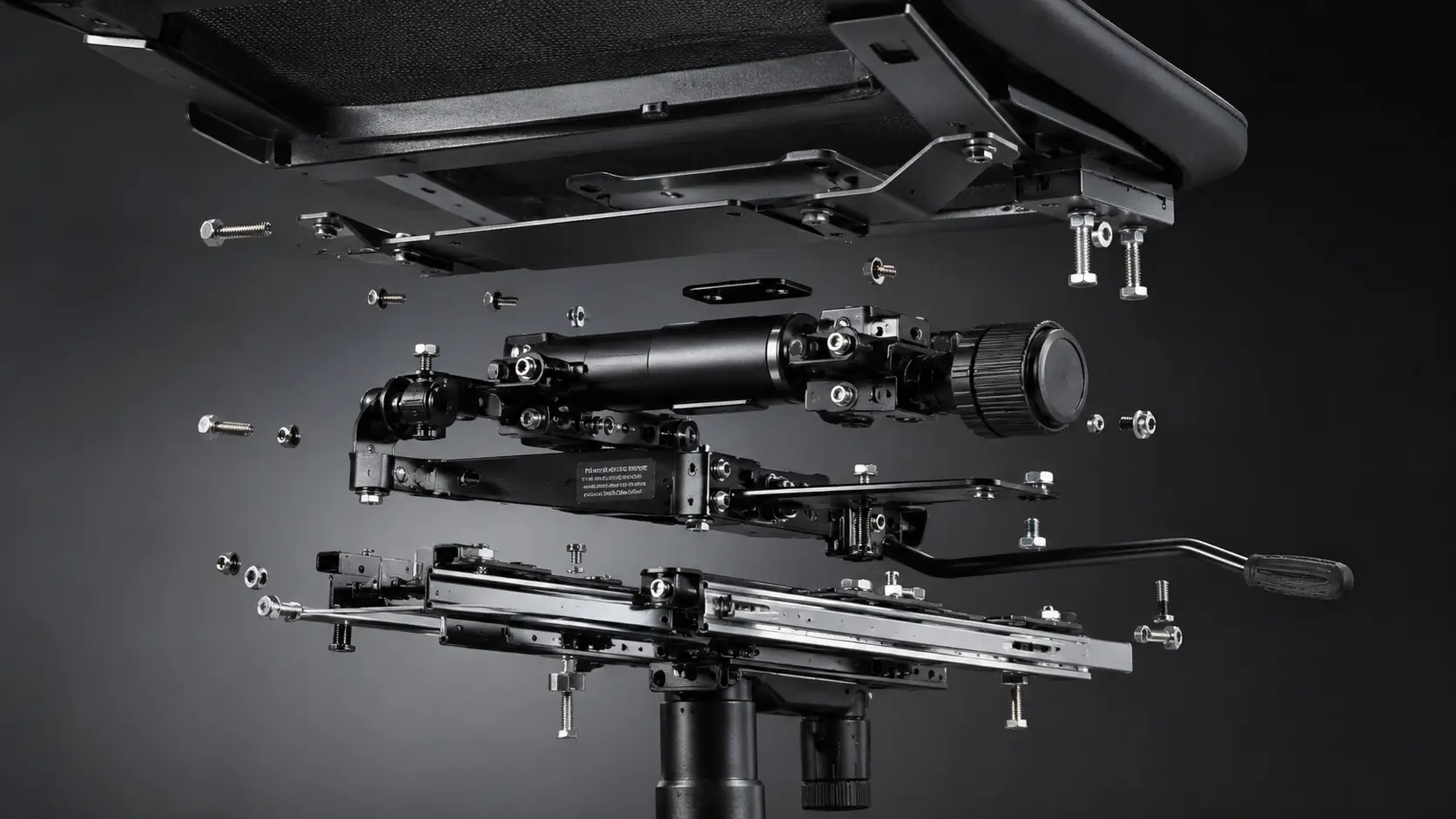
📌 Visual Explainer 2: Architectural engineering exploded view. Detailed blueprint displaying the heavy-duty iron tension cylinders and variable lock linkages required to support smooth spinal recline without lifting the front seat-lip.
Head-to-Head Lumbar Specification Comparison Table
| Ergonomic Factor | Auto-Tracking Lumbar Design | Manual PostureFit Tension System |
|---|---|---|
| Adjustment Type | Self-Adjusting Dynamic Pivot (Reactive) | Dual-Pad Independent Manual Dial Lock |
| Primary Support Target | L4-L5 Vertebrae Floating Tracking | Sacral Inward Curvature Bracing Base |
| Seat Pan Depth Slider | Integrated 2.5-inch Variable Travel Link | Fixed Pelvic Base Frame Matrix |
| Build Integrity & Lifespan | Commercial Nylon Polymer Base | 5 Years | Die-Cast Brushed Aluminum Frame | 12 Years |
Lifestyle Clusters: Matching Chairs to Your Sitting Habits
To unlock real benefits from your investment and find the best office chairs for lower back pain, your choice must align perfectly with your specific workflow habits. Purchasing premium materials that do not match your movement patterns will compromise posture correction.
📊 The Long-Haul 10-Hour Executive
If your daily task involves continuous financial modeling or administrative reviews, you are highly vulnerable to static strain. You require an adjustable mesh chair with independent suspension zones to distribute weight evenly across the entire pelvic girdle and ease sciatic pressure points.
🎮 The Fluid Creative Animator
If your workflow requires constant posture shifts, leaning forward to sketch, or reclining to review renders, static supports will fail. Look for auto-dynamic split-back models that adapt instantly to counteract complex, combined ergonomic chairs for back and neck pain complications.
The Active Setup: Eradicating Chronic Back Strain
Clinical ergonomic testing demonstrates that even a premium posture chair cannot completely eliminate the vascular slowing caused by remaining seated for an entire shift. True protection against lower back pain requires introducing controlled movement into your workday. This is where combining an adaptive chair with an advanced motorized standing desk provides maximum health benefits.
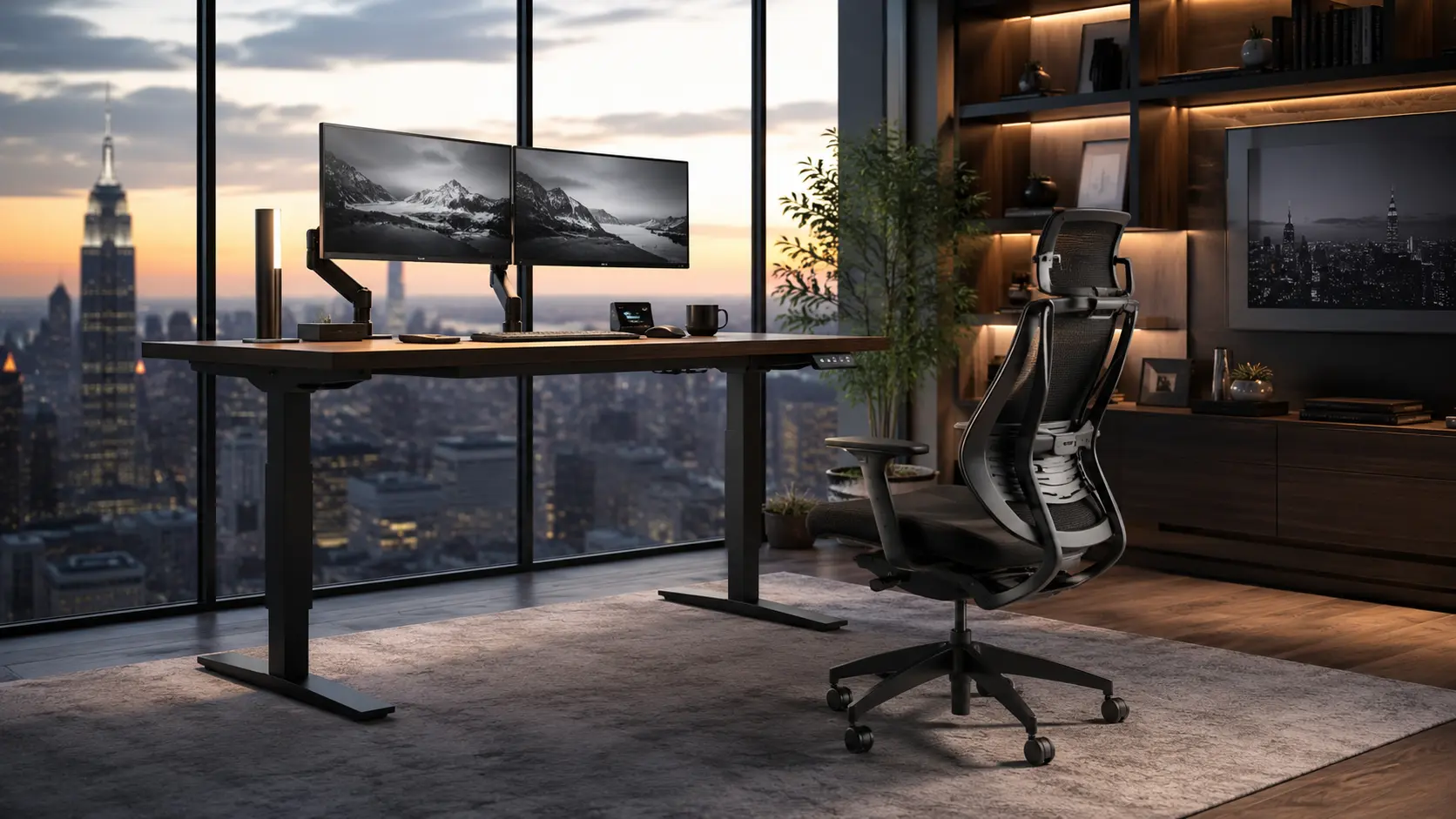
📌 Visual Explainer 3: Clean professional office setup. Merging responsive back-bracing seating with an electric sit-stand workstation reduces lower back fatigue by up to 76% while keeping the pelvis aligned.
Alternating between sitting and standing profiles for 15 minutes every hour decompresses your spinal discs, relaxes tight hamstrings, and reactivates deep core muscles. Utilizing a premium workstation—like the heavy-duty FlexiSpot Standing Desk series—lets you save precise digital height settings. This guarantees that whether you stand or sit, your desk surface matches your exact elbow height, preventing the shoulder slouching that drives complex upper body issues.
Market Realities: New Market Premium vs Certified Refurbished
For many professionals across North America, paying $1,500 upfront for a new high-end task chair is a major investment. A popular strategy recommended throughout communities like r/OfficeChairs is purchasing authentic seating solutions through certified refurbished specialized platforms on Amazon Renewed. These chairs undergo extensive structural validation, receiving updated pneumatic cylinders and complete baseline matrix tests, delivering deep relief at a fraction of standard retail prices.
Frequently Asked Questions (FAQs)
What type of office chair configuration is best for lower back pain? ▼
Models that feature height and depth-adjustable sacral-lumbar bracing combined with a synchronized recline system deliver the most reliable lower back support. Sacral bracing prevents posterior pelvic tilt, while a proper synchro-tilt recline decompresses your L1-L5 spinal vertebrae without lifting your thighs or adding pressure to your legs.
Does mesh or heavy foam seating provide better lower back support? ▼
Premium multi-zone suspension mesh generally performs better for long sessions because it dynamically adjusts to your unique body shape and manages heat. While high-density foam offers thick initial cushioning, it can compress over multi-hour sits and lose its protective structural shape.
How does seat pan depth adjustability affect spine strain? ▼
Seat depth dictates how your upper thighs distribute weight. If your seat pan is too deep, it presses against the back of your knees, cutting off circulation and forcing you to slide your torso forward away from the lumbar support. A proper slider maintains a two-to-three finger gap behind the knees, keeping your spine resting securely against the chair backrest.